Views: 0 Author: Site Editor Publish Time: 2025-10-22 Origin: Site


Durability is one of the first things professionals and outdoor enthusiasts consider when choosing a Military Belt. Whether used in daily patrol duties, field operations, or outdoor adventures, the lifespan of a tactical belt directly affects reliability and safety. This article explains how long tactical belts typically last, what determines their longevity, how to maintain them, and when to replace them — helping you get the best performance and value from every belt made by Guangzhou Alida Trading Co. Ltd.
The durability of a tactical belt is primarily defined by the materials and craftsmanship behind it. Each type of construction material — from ballistic nylon to reinforced webbing and full-grain leather — reacts differently to daily wear and environmental exposure.
Most modern tactical belts rely on ballistic nylon or reinforced webbing for strength and flexibility. These materials are specifically engineered for high-tension use. Ballistic nylon resists abrasion, stretching, and tearing even when loaded with holsters, magazine pouches, or other heavy tactical equipment. Reinforced webbing, often layered with high-density stitching, ensures the belt retains its shape under stress. In our manufacturing process at Guangzhou Alida Trading Co. Ltd., we use military-grade nylon such as 1000D Cordura to achieve the perfect balance between rigidity and comfort — a feature that significantly extends belt life.
Leather tactical belts, though less common for full-duty use, offer excellent durability for civilian everyday carry (EDC) or range applications. Full-grain leather can last for years if properly conditioned and protected from moisture. However, without reinforcement, leather may stretch or warp under the weight of heavy gear, shortening its usable lifespan. Many professionals prefer hybrid designs that combine leather aesthetics with internal nylon cores for added rigidity.
Advanced hybrid belts, which combine nylon webbing with a thin metal or polymer core, deliver exceptional load-bearing capacity. These belts maintain structural integrity under heavy loads, ideal for law enforcement and military missions. The core prevents bending or sagging even after years of use, making this construction one of the most durable options available in the market.
A belt’s buckle often determines how long the product remains functional. Quick-release buckles made from aircraft-grade aluminum or stainless steel last significantly longer than plastic buckles or traditional pin buckles. The quick-release design also minimizes wear on the webbing, as it does not require continuous pulling through loops. At Guangzhou Alida Trading Co. Ltd., our belts feature corrosion-resistant metal buckles tested to withstand repeated cycles of use without deformation — a small but crucial detail that ensures long-term reliability.
Before any belt leaves our production line, it undergoes a series of strength and abrasion tests following NIJ and internal durability standards. Quality indicators include double or triple stitching, sealed webbing edges, and stress-tested buckle assemblies. When choosing a belt, look for certifications, tensile strength ratings, and clear evidence of quality control — all signs that you’re buying a product designed for years of dependable service.
The average lifespan of a tactical belt varies depending on how and where it’s used. Factors such as exposure to sunlight, water, and daily load weight can make a significant difference.
For users in law enforcement, military, or security operations, tactical belts are often worn for long hours under challenging conditions. Continuous tension from holsters and gear, frequent movement, and environmental exposure naturally shorten lifespan. A high-quality ballistic nylon belt can last two to four years under such conditions before visible wear appears. The key signs of aging include fraying at stress points, minor buckling deformation, or faded webbing from UV exposure. Replacement should occur as soon as structural integrity is in doubt, especially if the belt supports life-saving gear.
For civilians using tactical belts for concealed carry or everyday carry purposes, the wear pattern is lighter. With proper maintenance and moderate use, a reinforced nylon or hybrid EDC belt typically lasts three to five years. Most users report that the belt remains fully functional long after its cosmetic appearance begins to fade. The materials used by Guangzhou Alida Trading Co. Ltd. are tested for endurance cycles beyond standard EDC demands, offering long-term reliability with minimal maintenance.
For occasional users, such as hikers or outdoor adventurers, the lifespan of a tactical belt can extend beyond five years or even longer. Since the belt is not subjected to daily stress, degradation occurs slowly. The key is proper storage — keeping it dry, clean, and away from direct sunlight. Our tactical web belts, made from UV-resistant ballistic nylon, are specifically designed for such environments, ensuring the belt performs reliably whenever it’s needed.
Based on industry standards and customer feedback, typical lifespan ranges are as follows:
Usage Type | Average Lifespan | Common Material | Notes |
Law Enforcement / Military | 2–4 years | Ballistic Nylon / Reinforced Webbing | Heavy daily use, exposure to friction |
Civilian EDC | 3–5 years | Nylon / Leather Hybrid | Moderate load, mixed environments |
Outdoor / Occasional | 5–7 years | Reinforced Nylon | Light use, proper storage conditions |
These estimates are averages; actual performance depends heavily on build quality and maintenance habits. Belts from Guangzhou Alida Trading Co. Ltd. often exceed these lifespans due to advanced material selection and precision manufacturing.
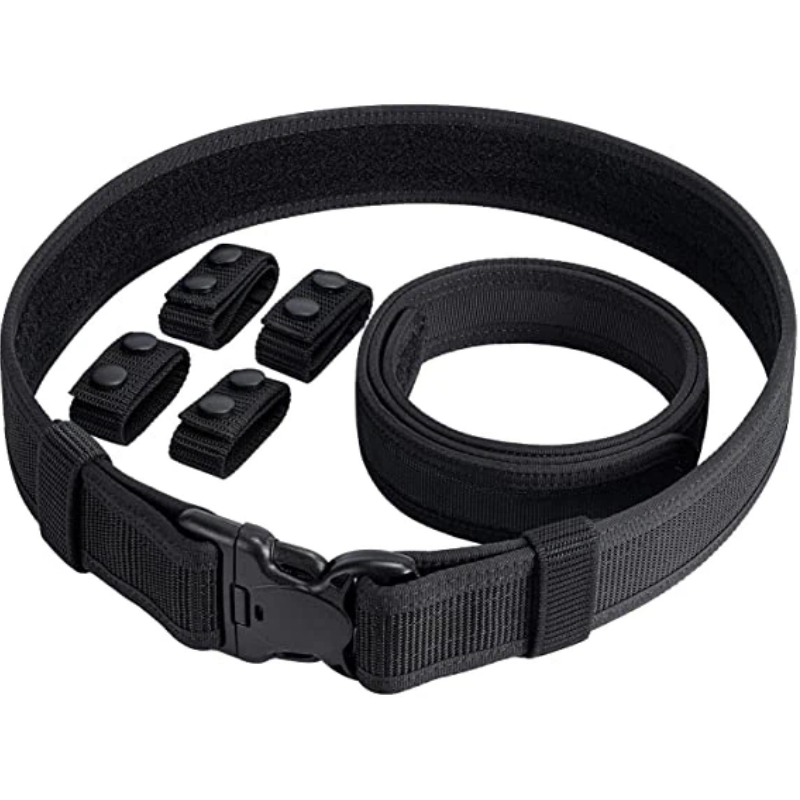
Proper care is the simplest way to double or even triple a belt’s usable life. Tactical belts are designed to endure extreme conditions, but they still require basic maintenance to remain dependable.
For nylon belts, regular cleaning with mild soap and lukewarm water removes sweat, dirt, and salt that can degrade fibers. Avoid soaking the belt or using harsh detergents, as this weakens webbing over time. After washing, let the belt air dry naturally — never use heat or sunlight to speed up drying.
Leather belts demand different care. Wipe them down with a damp cloth, allow them to dry at room temperature, and apply leather conditioner periodically to prevent cracking. Never use chemical cleaners or immerse leather in water.
Storing tactical belts correctly prevents unnecessary deformation. Hang the belt in a cool, dry place or roll it loosely in a drawer to preserve its shape. For users who wear belts daily, rotating between two belts allows each one to recover from stress, significantly extending lifespan. Guangzhou Alida’s modular design belts, which feature interchangeable buckles and sections, make rotation easy and cost-effective.
Regular inspection helps identify early signs of wear before they turn into failures. Examine buckle pins, rivets, and stitching for looseness. If you notice wobbling or slipping buckles, it’s time to consider replacement or repair.
To check integrity at home, secure the belt around a solid anchor and apply moderate tension. Observe whether the buckle slips or the webbing stretches. A properly maintained belt should remain tight without distortion. If there is noticeable give or visible fraying, the belt may no longer be safe for heavy-duty use.
Even the strongest tactical belts eventually reach the end of their service life. Recognizing early warning signs prevents failure during critical moments.
Frayed Webbing: Loose fibers around the edges signal weakening tension capacity.
Broken or Loose Stitching: Especially at load-bearing points such as buckle joints or MOLLE loops.
Loosened Metal Plates or Buckles: Reduced grip strength compromises security and stability.
Buckle Slippage: If your belt no longer stays tight under weight, the locking mechanism may have worn out.
Visible Deformation: Curved or twisted webbing suggests the material’s core structure is failing.
If a belt shows any of these signs during duty use, replace it immediately. A critical failure in the field can endanger the wearer or damage attached equipment. Guangzhou Alida Trading Co. Ltd. offers replacement options and modular upgrades that ensure uninterrupted performance even under continuous field deployment.
Selecting a tactical belt with long service life requires understanding what features contribute to durability.
High-Density Ballistic Nylon or Cordura: Offers abrasion resistance and shape retention.
Reinforced Stitching: Double or triple-row stitching ensures seams don’t unravel under stress.
Replaceable Hardware: Modular buckles extend belt lifespan by allowing component replacement.
Certified Construction: NIJ-compliant materials and tested load-bearing capacity.
Corrosion-Resistant Buckles: Essential for humid or marine environments.
Belts made from thin, unreinforced nylon or imitation leather tend to lose structure within months. Cheap plastic buckles can crack or warp under heat. Always look for documented quality control, reputable manufacturer history, and verified user reviews.
A long-lasting belt is an investment. Products from Guangzhou Alida Trading Co. Ltd. include reinforced stitching, replaceable hardware, and robust warranty coverage. Our belts undergo load tests that simulate years of use, ensuring they perform reliably from the first day to the last.
A high-quality tactical belt can serve reliably for years when made with durable materials and maintained properly. Understanding what affects lifespan — from material quality to buckle strength — helps users make informed choices. Products from Guangzhou Alida Trading Co. Ltd. are engineered to meet the highest NIJ and field standards, offering long-term strength, stability, and safety. To explore our range of tactical web belts and other professional-grade gear, contact us today to find the right solution for your operational needs.